Move outside. Ten minutes is enough.
No gym, no equipment, no subscription. A short routine built around daylight, walking and breathing — done before the day starts.
Start the routine
Why outdoors
Light in the first hour does more than wake you up. It sets the clock the rest of the day runs on, and most of us meet it through a window at best.
Moving outside also asks less of you than a gym does. No changing room, no queue for the machine, no mirror, no reason to talk yourself out of it on the way.
And ten minutes is small enough to survive a bad morning. An hour is a plan. Ten minutes is a habit.
The ten-minute routine
One loop of your street, or the nearest park. Start the clock when the door closes behind you, and stop it when you are back on the step.
-
01
Step outside
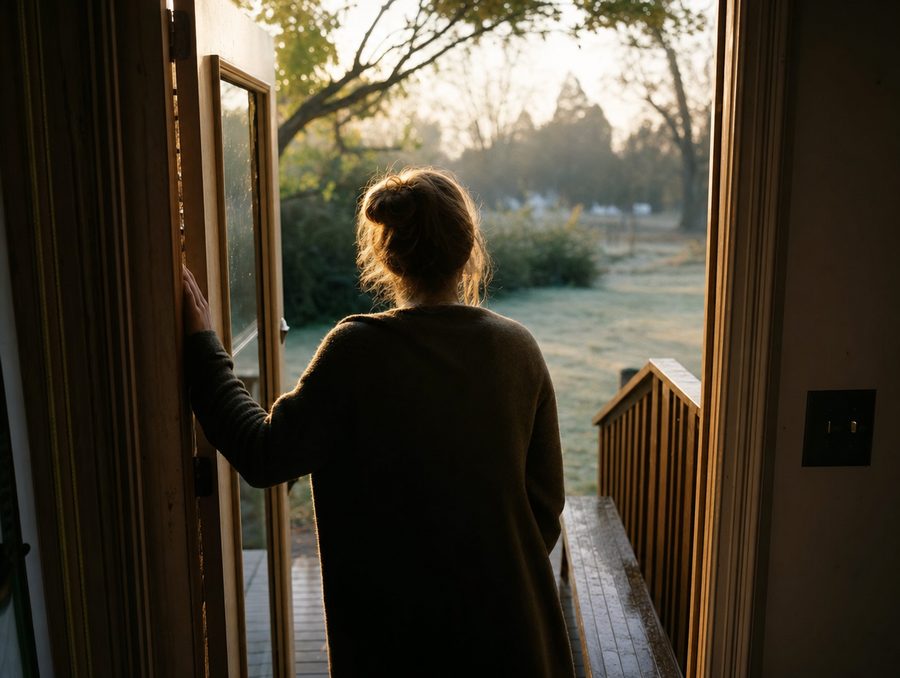
First light, before the phone. Stand on the step for a moment and let your eyes adjust. The walk starts at the door, not at the gate.
-
02
Walk, don't stroll
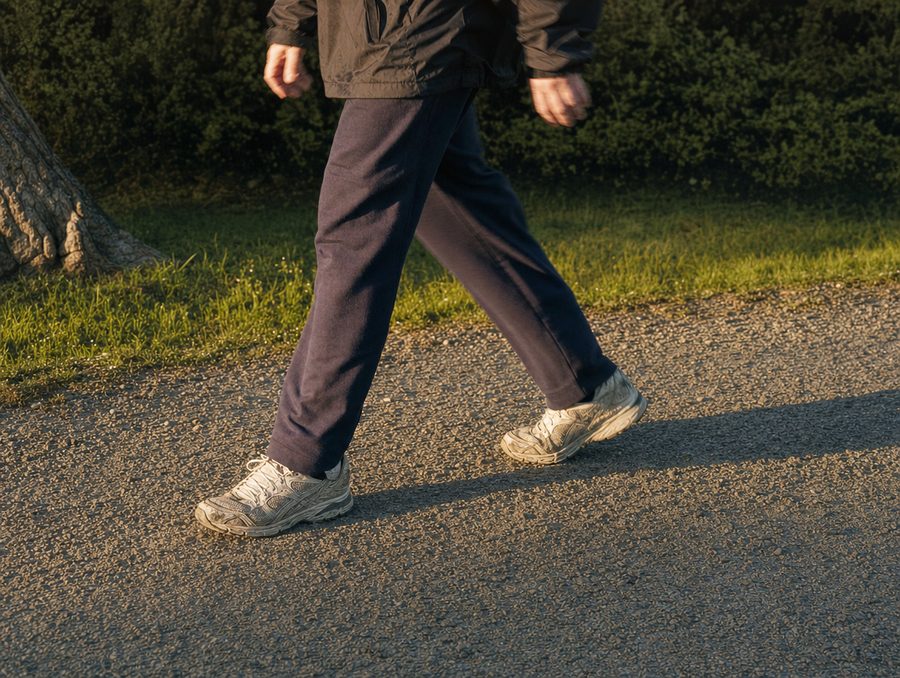
Brisk, arms swinging, ten minutes is the whole thing. Aim for the pace you would use to catch a bus, not the pace you use in a museum.
-
03
Four slow breaths
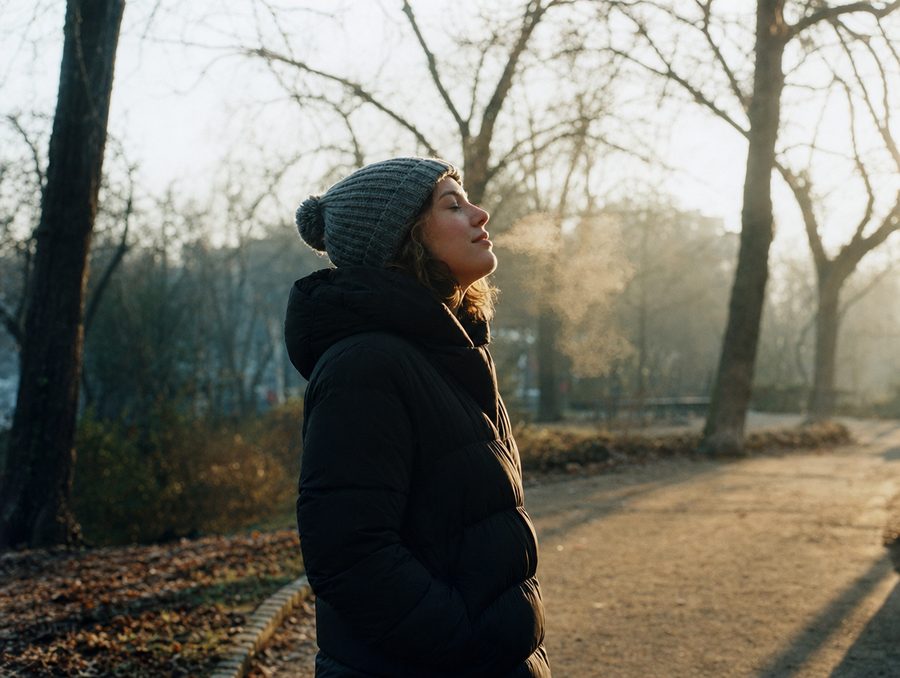
In for four, hold for four, out for six, at the end of the walk. The longer exhale is what settles you; the counting just gives you something to hold on to.
-
04
Sit for a minute
Let the heart come down before going back in. A bench, a low wall, the top step. Nothing to check on the phone, nothing to plan.
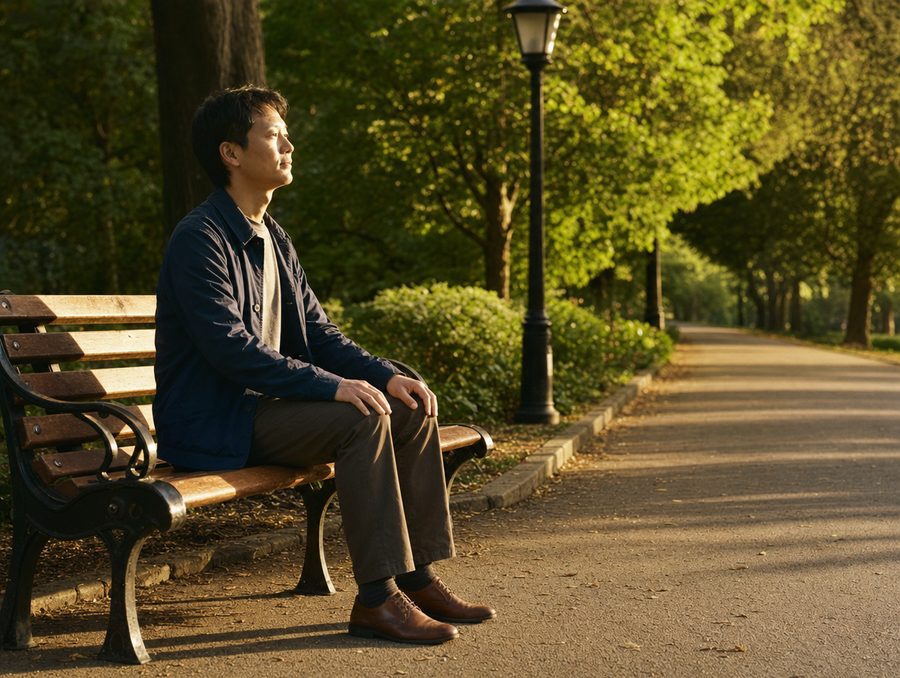
Walking
7,000-8,000steps a day. A rough target, not a rule.
Seven to eight thousand steps a day is the figure most of the evidence keeps landing on. It is a number you can reach on an ordinary Tuesday, which is the only kind of target that survives contact with a real week.
Pace gets less attention than it deserves. Twenty brisk minutes do more for the heart than an hour of drifting past shop windows, and the difference is not distance. It is how hard you are working.
So pick one stretch of your usual route and make that the fast part. Everything else can stay slow.
Breathing
Four in, four held, six out. The counting is scaffolding. The long exhale is the point.
An exhale that runs longer than the inhale leans gently on the brakes. The heart slows a step, the shoulders drop, and it happens whether or not you believe in it.
Four rounds, standing still, eyes closed, at the end of the walk. Then open them and go inside.
Breathe in
4 - 4 - 6
4 - 4 - 6
The circle follows the rhythm. Four in, four held, six out.
Sunlight
Fifteen minutes outdoors without sunglasses, early, is the cheapest thing you can do for tonight's sleep.
Morning light is the signal that starts the clock the rest of the day runs on. Get it early and the evening takes care of itself; miss it and you spend the day trying to catch up.
Winter makes it harder. The sun sits low, the sky stays grey, the walk gets shorter, and that is exactly when the short walk matters most.
Cloud does not cancel it. A grey morning outside is still many times brighter than the brightest kitchen.
“The hardest part is the door. Everything after it is easy.”